

Universal Magnetic Smartwatch Charger: Highlighting Magnetic Design, Compatibility, and Durability for Confident Memory Tech Purchases
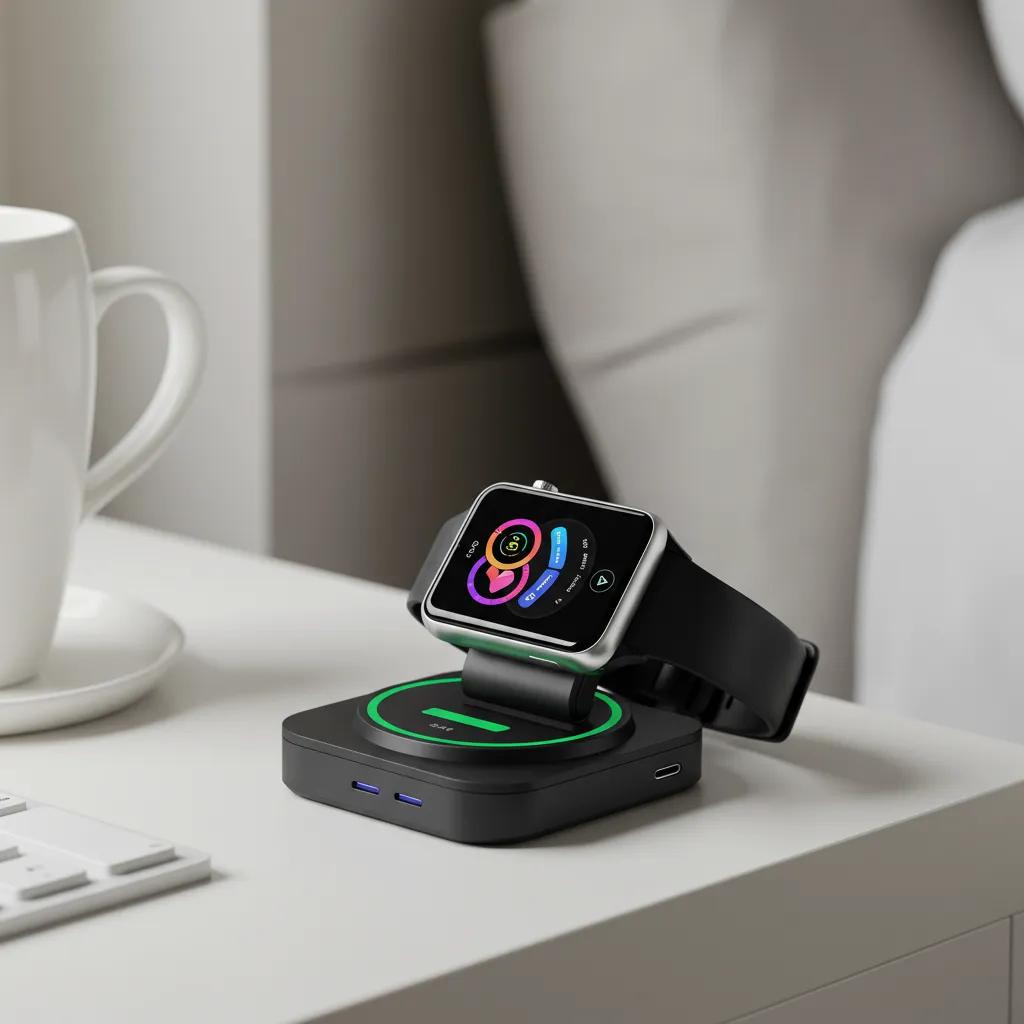
Magnetic smartwatch chargers use a snap-on magnetic connection to align power contacts without repeated mechanical insertion, reducing wear and improving daily convenience for owners of wrist-worn devices.
This article explains how magnetic design, universal 2-pin compatibility, and durable construction combine to deliver a more reliable charging experience, and it details what to check when choosing a cable. Readers will learn the practical benefits of magnetic charging, how to verify 2-pin compatibility and polarity, what makes cables last longer, and straightforward maintenance and troubleshooting steps. The piece also compares typical failure modes of standard smartwatch chargers with the Smart Watch 60CM 2-Pin Universal USB Data Charging Cable Magnetic Charger, using material and safety attributes to show how design choices reduce returns and user frustration. Finally, industry trends and buyer guidance will help you choose a universal magnetic charger that balances convenience, safety, and longevity.
What Are the Key Benefits of Magnetic Smartwatch Charging Cables?
Magnetic smartwatch charging cables provide aligned electrical contact through magnetic attraction, which reduces the need for forceful insertion and preserves delicate watch pins. The same mechanism improves daily reliability by preventing misalignment and accidental disconnects when the wearer moves, producing steadier current delivery and fewer interrupted charges. In practice, magnetic chargers also protect the watch housing and connector area from repeated mechanical abrasion and reduce the likelihood of bent contacts. The following list summarizes the primary user-facing benefits and leads into a closer look at how these advantages arise from the magnetic design.
Magnetic charging delivers clear user advantages:
- Port protection: Snap-on magnets remove repeated insertion wear on fragile pins and ports.
- Ease of use: One-handed, alignment-free attachment simplifies daily charging routines.
- Reliable contact: Magnetic alignment reduces intermittent connections and dropouts.
- Safety enhancement: Built-in protections paired with steady contact lower risk of electrical faults.
These benefits explain why many users prefer magnetic solutions, and the next section analyzes how the magnet reduces physical stress on watch connectors.
How Does Magnetic Design Protect Your Smartwatch Port?
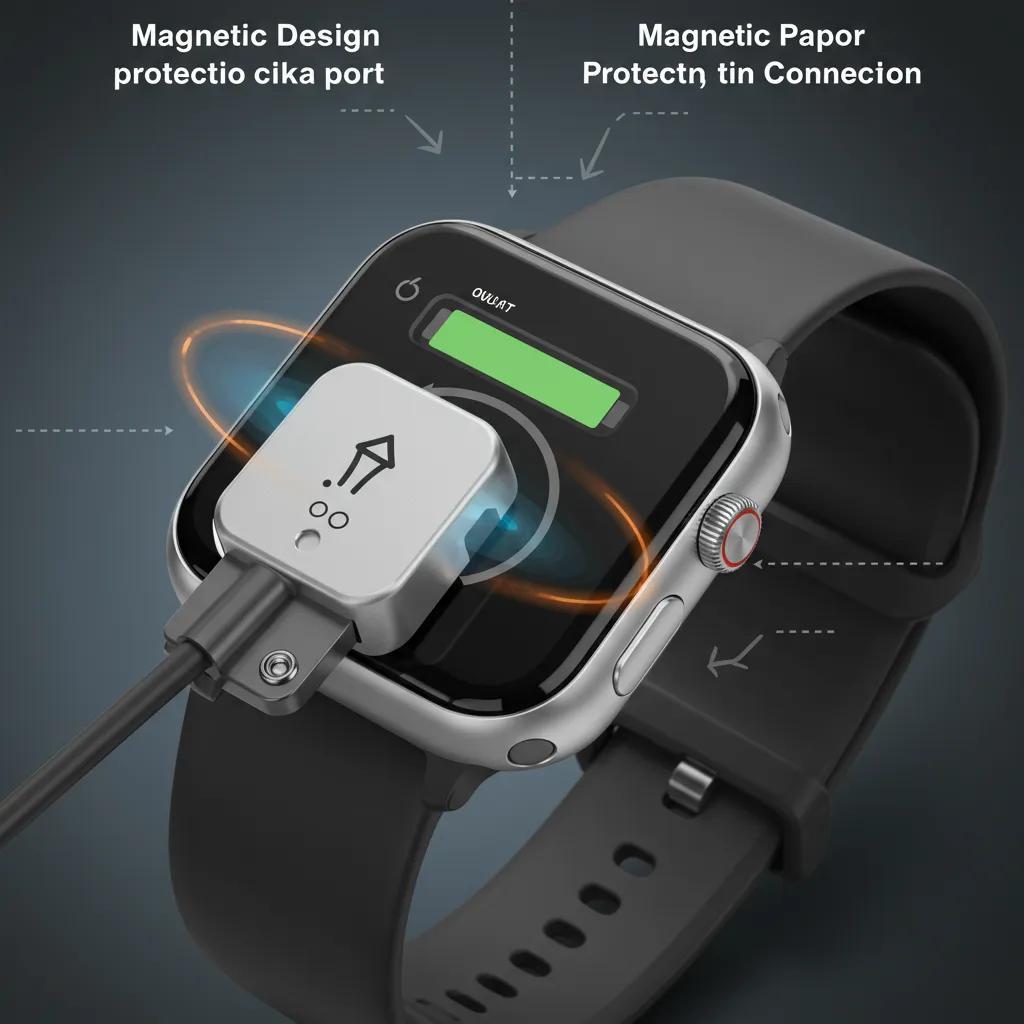
Magnetic design protects smartwatch ports by coupling alignment and contact pressure without repeated insertion force, which reduces mechanical abrasion on exposed pins. By allowing the connector to snap into place, the magnetic interface spreads contact wear across a stable surface and avoids pin deformities caused by sideways torque, which is a common failure mode in friction-fit plugs. This gentler mechanical interaction preserves the plated contacts on both cable and watch and reduces long-term oxidation from micro-movements, maintaining a reliable electrical path. Understanding this protection mechanism naturally leads to assessing convenience benefits that accompany magnetic systems.
Why Is Snap-On Magnetic Charging More Convenient Than Standard Chargers?
Snap-on magnetic charging is convenient because it removes the need for precise visual alignment and lets users connect their watch quickly with one hand, essential in low-light or hurried scenarios. This convenience reduces fumbling at bedside charging, enables simpler cable attachment when the device is on a wrist-mounted stand, and shortens daily charging time spent aligning proprietary plugs. The magnetic catch also reduces accidental disconnections when the cable or watch is nudged, which means fewer interrupted overnight charges and less frustration overall. Having covered convenience, the next subsection examines the safety features that should accompany magnetic chargers.
What Safety Features Enhance Magnetic Charger Reliability?
Safety features such as overvoltage protection and overcurrent protection guard smartwatch batteries from transient electrical events and sustained faults, ensuring charging remains within safe electrical limits. Thermal management and stable current delivery further reduce stress on internal battery chemistry, which supports longer battery life and lowers the chance of heat-related failures during charging. When a magnetic connector also provides solid, repeatable contact, protection circuitry can function as intended without spurious disconnects that complicate power management. With safety fundamentals explained, the following section turns to technical compatibility: the universal 2-pin approach that solves device fragmentation.
How Does the 2-Pin Universal Compatibility Improve Smartwatch Charging?
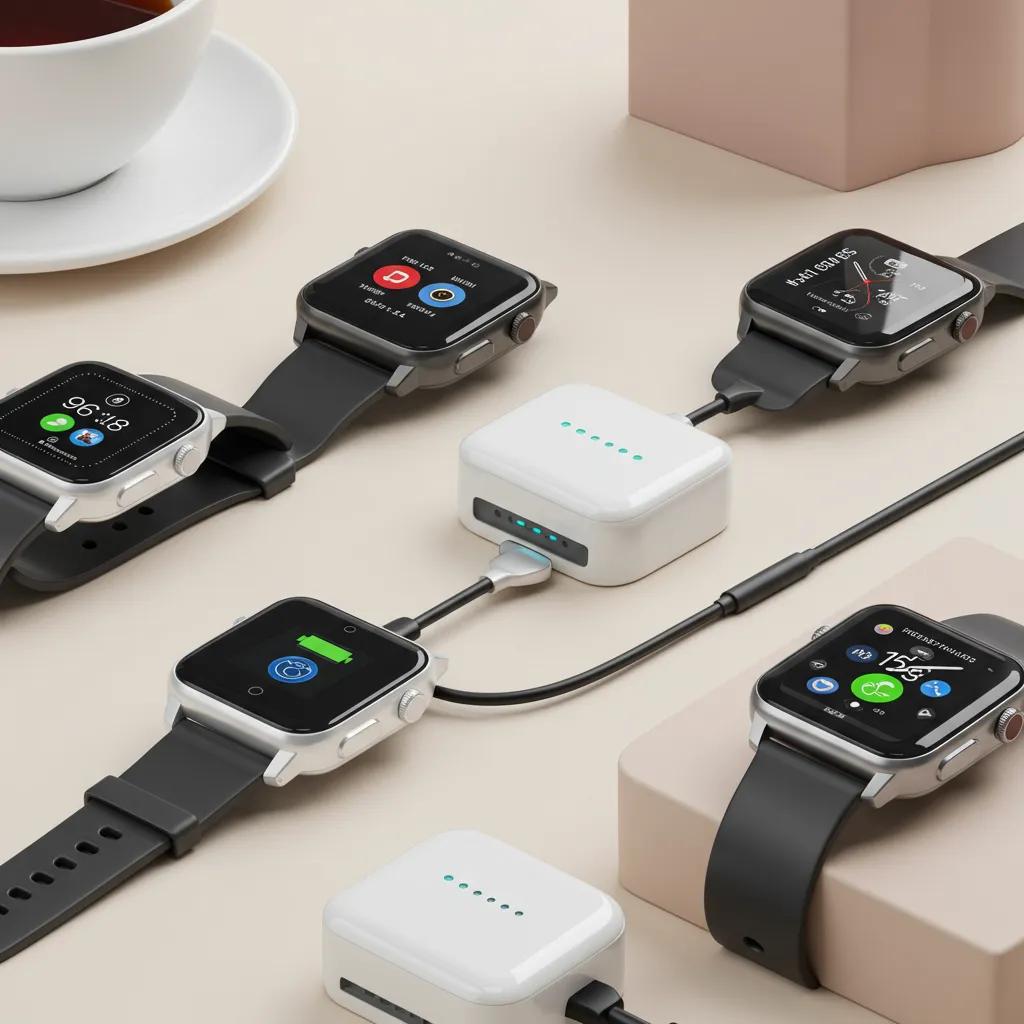
Universal 2-pin compatibility standardizes the pin configuration used by many smartwatch manufacturers, allowing a single cable to fit multiple devices when pin distance and polarity match the host. This standardization simplifies accessory ownership because users no longer need proprietary chargers for each device, and it reduces confusion at point-of-sale and after purchase. A practical verification framework — checking pin distance, polarity (STD/NS), and connector fit — helps buyers confirm compatibility before they buy, and a brief comparison table below illustrates common pin distances and polarity notes to aid identification. After the table, users can read guidance on measuring pin spacing and why a 60CM cable length is a practical balance for daily use.
The table below helps compare common 2-pin attributes to decide compatibility.
| Pin Distance (approx.) | Polarity Type | Compatibility Notes |
|---|---|---|
| 3.0 mm | STD | Fits many older 2-pin designs; check contact orientation. |
| 3.5 mm | NS | Common on several mid-range smartwatches; polarity reversal prevents charging if mismatched. |
| 4.0 mm | STD/NS mixed | Some manufacturers vary; visual match and magnet alignment recommended. |
This comparison shows why measuring the pin spacing and checking polarity indicators matters, and the next subsection explains a simple method to measure pin distance accurately.
What Is the Importance of 2-Pin Configuration and Pin Distance?
Pin distance determines whether the charger’s contact pads line up precisely with the watch’s exposed contacts, which is essential for low-resistance current flow and reliable charging. A mismatch of even a fraction of a millimeter can produce intermittent contact or no charge at all, so measuring center-to-center pin spacing with a caliper or a ruler and confirming the contact diameter helps establish compatibility. Users should also visually confirm that the magnetic connector’s housing matches the watch recess to ensure magnets center the contacts correctly. With pin distance explained, the following subsection covers how magnetic polarity types further affect fit.
How Do STD and NS Magnetic Polarity Affect Charger Compatibility?
Magnetic polarity types—commonly referred to as STD and NS—describe the north/south magnet orientation across contacts and influence whether two devices will mate. If polarity is reversed between cable and watch, the magnets may repel or align incorrectly, preventing proper contact and therefore charging; checking the product specification or testing alignment on a non-critical device helps determine polarity. Some universal chargers include polarity-neutral designs or reversible contact arrangements, reducing the chance of mismatch, but users should confirm polarity where possible before assuming compatibility. Understanding polarity leads naturally to considering cable length, and the next subsection explains why 60CM is a pragmatic choice.
Why Is the 60CM Cable Length Ideal for Everyday Use?
A 60CM cable length offers a practical compromise between portability and reach: it is long enough to reach bedside outlets or desk chargers without excess slack that tangles, yet short enough to pack easily when traveling. This length reduces strain on the connector because it minimizes unsupported cable leverage that can pull the magnetic head away from the watch during use, and it keeps the cable tidy on a nightstand. For users who need a longer run, extensions are possible, but for the majority of daily charging scenarios, 60CM provides ergonomic convenience without unnecessary material. After evaluating compatibility and length, the next section compares how a well-designed universal magnetic charger stacks up against standard proprietary chargers.
How Does the Memory Tech Charger Compare to Standard Smartwatch Chargers?
Standard smartwatch chargers often rely on proprietary shapes or rigid connectors that experience common failure modes such as frayed cables, loose contacts, and limited cross-device compatibility. In contrast, the Smart Watch 60CM 2-Pin Universal USB Data Charging Cable Magnetic Charger combines a snap-on magnetic design with universal 2-pin compatibility to reduce these issues, while durable materials and integrated safety protections address longevity and device safety.
The following table shows a side-by-side comparison of typical attributes.
| Feature | Memory Tech Charger | Standard Smartwatch Charger |
|---|---|---|
| Magnetic design | Snap-on magnetic connection for repeatable alignment | Often friction-fit or proprietary dock; alignment dependent |
| Cable length | 60CM practical reach | Varies; often shorter, less flexible |
| Materials | TPE fixed connector, flexible PVC jacket, high-quality copper wire | Cheaper plastics, limited strain relief, lower-grade conductors |
| Safety | Overvoltage and overcurrent protection | Often minimal or unspecified protection |
| Expected longevity | Designed for reduced wear via connector and materials | Higher incidence of fraying and contact wear |
This comparison highlights how deliberate material and safety choices can reduce failure modes, and the next subsection lists common issues users face with standard chargers.
What Are the Common Issues with Standard Smartwatch Chargers?
Standard chargers frequently suffer from frayed cable jackets near the connector and weakened strain relief, which leads to exposed conductors and intermittent charging. Proprietary plug shapes can also make them incompatible across devices, forcing owners to keep multiple chargers and increasing the risk of buying the wrong accessory. Loose or bent contacts are another typical issue, especially where mechanical insertion exerts sideways force on pins, accelerating wear. Appreciating these failure points sets the stage to explain how Memory Tech’s charger addresses them specifically.
How Does Memory Tech’s Magnetic Charger Address Fragility and Compatibility Problems?
The Smart Watch 60CM 2-Pin Universal USB Data Charging Cable Magnetic Charger uses a TPE fixed connector and a PVC-sheathed flexible cable with high-quality copper conductors to mitigate common fragility issues; these materials improve strain resistance, flexibility, and current stability. The universal 2-pin configuration removes the need for proprietary docks, and the magnetic snap-on connection reduces mechanical insertion cycles that cause pin deformation. Built-in protections such as overvoltage and overcurrent protection add an electrical safety layer that further reduces device risk during charging. Having compared construction and compatibility, the next subsection considers charging performance and port protection benefits.
What Are the Advantages in Charging Speed and Port Protection?
While charging speed depends primarily on the watch’s internal charging circuitry and the host USB power source, stable contact from a properly aligned magnetic connection promotes consistent current flow and avoids the interruptions that mimic slow charging. Mechanical port protection is another clear advantage: by eliminating repeated forceful insertions, the magnetic connector extends the life of delicate contact pads and reduces the frequency of hardware repairs or accessory replacements. These stability and protection benefits combine to provide a more dependable daily user experience than many standard chargers, which often prioritize cost over durable design.
What Materials and Features Ensure Durability in Smartwatch Charging Cables?
Durability in charging cables arises from a combination of resilient connector materials, flexible and abrasion-resistant cable sheathing, high-quality conductors, and protective electronics that prevent stress from translating into permanent damage. Materials such as TPE for connector moldings and PVC for the cable jacket provide elasticity and abrasion resistance, while oxygen-free or high-quality copper conductors maintain low resistance and thermal stability. Design elements like reinforced strain reliefs and fixed connector moldings limit stress at critical transition points where bending causes most failures. The table below breaks down how core materials contribute to these durability and performance attributes.
| Component | Material / Feature | Contribution to Durability |
|---|---|---|
| Connector housing | TPE fixed connector | Resists impact, maintains seal, and reduces cracking |
| Cable jacket | Flexible PVC | Provides abrasion resistance and flexibility for repeated bending |
| Conductors | High-quality copper wire | Ensures stable current transmission and reduces heat buildup |
| Strain relief | Reinforced molding | Protects cable at connector transition from sharp flexing |
Understanding material roles clarifies what to look for on spec sheets, and the next subsection addresses specific design elements that limit bending and wear.
How Do TPE, PVC, and Copper Wire Enhance Cable Longevity?
TPE in connector moldings resists splitting and maintains elasticity across temperature cycles, preventing brittle failure that can expose contacts. A flexible PVC jacket combines durability with bend tolerance and shields internal conductors from abrasion, while high-quality copper maintains conductivity and minimizes resistive heating under load. Together these materials preserve both mechanical and electrical integrity during daily use, reducing the replacement rate and improving cost-per-use for owners. With materials covered, the following subsection considers mechanical design features that prevent bending failures.
What Design Elements Protect Against Bending and Wear?
Design elements such as long tapering strain reliefs, thicker connector moldings, and cable geometry that avoids sharp angle transitions reduce stress concentration and prevent repeated micro-fractures in conductors. Reinforced junctions at the cable-to-connector interface and a fixed connector construction limit lateral movement that otherwise leads to fraying and intermittent faults. Manufacturers may also thread or braid internal layers to resist kinking, though flexible PVC jackets paired with reinforced moldings are the most common effective choice for smartwatch cables. These mechanical protections pair naturally with electrical safeguards, which are the focus of the next subsection.
How Do Overvoltage and Overcurrent Protections Safeguard Your Device?
Overvoltage protection prevents sudden voltage spikes from reaching the watch battery, while overcurrent protection limits sustained excessive current that could overheat battery cells or internal circuits; both are essential for protecting modern lithium-based smartwatch batteries. In practice, these protections reduce the risk of thermal events and abnormal charge cycles that shorten battery lifespan, and they enable the charger to respond safely to faults such as shorts or unstable host power. When such safety features are combined with steady magnetic contact, the overall charging environment is more controlled and less likely to damage the watch. Having covered durability and safety, we now explain why Memory Tech is a sensible source for these design choices.
Why Should You Choose Memory Tech for Your Smartwatch Charging Needs?
Memory Tech is presented in the product brief as the seller of the Smart Watch 60CM 2-Pin Universal USB Data Charging Cable Magnetic Charger, and their product attributes focus on universal compatibility, magnetic snap-on alignment, and durable material choices. The combination of TPE fixed connectors, flexible PVC cable jacket, and high-quality copper wire, together with built-in overvoltage and overcurrent protections, provides practical reasons to consider this product when seeking fewer replacements and broader device compatibility. Shoppers should look for clear compatibility charts, safety feature disclosures, and product imagery that demonstrates connector fit — these trust signals reduce uncertainty and improve purchase confidence. The next subsections outline how Memory Tech can communicate quality and the key buyer benefits to expect.
What Makes Memory Tech’s Quality and Customer Support Stand Out?
Memory Tech’s product specification emphasizes materials and safety features that address the most common failure modes of competing chargers, which signals a quality-focused design approach; translating that into clear product pages with spec sheets, compatibility notes, and return information helps buyers decide confidently. While direct customer support details are not included in the brief, the brand can further stand out by offering comprehensive compatibility guidance and visible protection feature callouts on listings. Presenting these facts transparently reduces buyer hesitation and supports lower return rates, enhancing long-term satisfaction. With quality communication addressed, the next subsection lists practical trust-building steps the brand can take.
How Does Memory Tech Build Confidence in Its Universal Magnetic Chargers?
Memory Tech can build trust by providing a clear compatibility chart, explicit mention of overvoltage and overcurrent protection, high-resolution images of connector fit, and explicit material callouts (TPE, PVC, copper) that explain durability benefits. Including troubleshooting tips, maintenance guidance, and a visible statement about testing or quality checks will reassure buyers that the charger is engineered for reliability. These signals convert technical attributes into purchase confidence and lower perceived risk for consumers navigating fragmented accessory markets. The following subsection summarizes key buyer benefits of choosing Memory Tech.
What Are the Key Benefits of Buying from Memory Tech?
Buying the Smart Watch 60CM 2-Pin Universal USB Data Charging Cable Magnetic Charger offers several buyer-facing outcomes tied to its design: fewer compatibility headaches due to the universal 2-pin approach, extended cable life from TPE and PVC construction, and improved device safety from overvoltage and overcurrent protection. The 60CM length balances reach and portability for bedside and desk use, while the snap-on magnetic connector simplifies everyday charging. These combined benefits reduce the total cost of ownership and the need to carry multiple chargers for different watches. Readers who prioritize durability and compatibility will find these attributes especially valuable.
How Can You Troubleshoot and Maintain Your Magnetic Smartwatch Charger?
Troubleshooting and routine maintenance extend the working life of a magnetic smartwatch charger while ensuring reliable operation, and a disciplined routine helps distinguish between simple fixes and genuine hardware faults. Begin diagnostics by checking magnetic alignment, pin spacing, and polarity, then clean contacts and test alternate power sources before concluding the cable is faulty. Regular maintenance—avoiding tight bends, keeping contacts clean, and storing the cable safely—prevents many common failures and preserves the charger’s protective features. The following sections provide concrete troubleshooting steps and maintenance habits that users can implement immediately.
What Are Common Charging Issues and How to Fix Them?
Common issues include intermittent charging, no-charge events, and slow or inconsistent charge rates; start by checking magnetic alignment and cleaning both cable and watch contacts with a dry, lint-free cloth. If alignment is correct but charging fails, test the cable on a known-good USB power source to isolate the culprit to host power or the charger itself, and inspect the cable for visible frays or damaged moldings. Confirm pin distance and polarity match the watch’s contacts; mismatch can present as no-charge even if the magnetic head attaches. These diagnostic steps resolve the majority of user-side faults and point to when a replacement is necessary.
How Should You Maintain Your Magnetic Charging Cable for Longevity?
Maintain longevity by avoiding sharp bends at the connector, coiling the cable loosely when storing, and keeping magnetic contacts free from dust or moisture that could impede contact quality. Periodically inspect the PVC jacket and TPE moldings for signs of wear and immediately stop using the cable if inner conductors are exposed or if the connector assembly loosens. Use gentle cleaning methods—dry cloth or compressed air—for contacts rather than liquids that could penetrate seals, and avoid high-heat environments that accelerate material aging. Regular attention to these practices keeps the charger functioning reliably over time.
What Are the Latest Trends and Industry Insights on Universal Smartwatch Chargers?
The smartwatch accessory market is moving towards solutions that reduce device fragmentation and emphasize durability and safety, as consumers prefer universal chargers that work across multiple devices while minimizing replacements. Growth in the smartwatch segment through 2023–2025 has increased demand for universal magnetic solutions that incorporate clear polarity and pin-distance guidance to reduce returns and compatibility issues. Manufacturers and accessory brands are responding with better material choices, enhanced protection circuitry, and improved specification transparency to match consumer preferences for cost-per-use and sustainability. The next subsections explore market drivers and future technical developments that could affect magnetic charging.
How Is the Smartwatch Market Driving Demand for Universal Chargers?
As more manufacturers and models enter the market, accessory fragmentation increases, prompting consumers to favor universal 2-pin solutions that minimize the number of chargers they must buy and carry. Cost and convenience are strong purchase drivers: shoppers prefer a single durable cable with clear compatibility over multiple proprietary chargers that quickly wear out. This market pressure encourages accessory makers to adopt common pin standards and provide explicit compatibility information to capture buyer trust. Considering consumer preferences naturally raises concerns about durability and safety, which the next subsection addresses.
Why Is Durability and Safety Increasingly Important to Consumers?
Durability and safety reduce lifetime costs and environmental impact by lowering replacements, and consumers today evaluate accessories on cost-per-use and safety credentials as much as on price. Safety features like overvoltage and overcurrent protection are especially important because smartwatch batteries are costly to replace and sensitive to charging conditions. Durable materials and reinforced design translate to fewer returns and a better ownership experience, reinforcing demand for well-made universal chargers. With these consumer priorities established, the final subsection looks at potential future developments.
What Future Developments Could Impact Magnetic Charging Technology?
Potential future developments include wider standardization efforts, such as emerging magnetic charging standards and integration with next-generation wireless charging protocols, which could simplify compatibility across more devices. Advances in materials—lighter, more wear-resistant polymers and improved conductor alloys—may increase cable longevity while reducing weight and bulk. Finally, tighter integration of smart protection electronics that communicate with host devices could enable safer, more efficient charging and reduce user uncertainty about compatibility and safety. These trends suggest magnetic charging will continue to evolve toward safer, more universally compatible solutions that benefit consumers and manufacturers alike.
Frequently Asked Questions
What types of smartwatches are compatible with the universal magnetic charger?
The universal magnetic charger is designed to be compatible with a wide range of smartwatches that utilise a 2-pin charging system. This includes many popular brands and models, provided they adhere to the standard pin distance and polarity specifications. To ensure compatibility, users should verify the pin distance and polarity type of their smartwatch against the charger's specifications before purchase. This approach helps avoid mismatches and ensures a seamless charging experience across different devices.
How can I tell if my smartwatch is compatible with a magnetic charger?
To determine if your smartwatch is compatible with a magnetic charger, check the pin distance and polarity type of your device. Most smartwatches will have this information in their user manual or on the manufacturer's website. You can measure the pin distance using a caliper or ruler, ensuring that it matches the charger's specifications. Additionally, confirm the polarity type (STD or NS) to avoid any charging issues. This verification process is crucial for ensuring a proper fit and reliable charging.
Can I use the magnetic charger with other devices besides smartwatches?
While the primary design of the universal magnetic charger is tailored for smartwatches, it may also be compatible with other devices that utilise a similar 2-pin magnetic charging system. However, it is essential to verify the pin distance and polarity of the other devices to ensure proper alignment and functionality. Using the charger with non-compatible devices could lead to ineffective charging or potential damage, so always check compatibility before use.
What maintenance steps should I take to prolong the life of my magnetic charger?
To extend the lifespan of your magnetic charger, regularly inspect the cable and connectors for signs of wear or damage. Keep the magnetic contacts clean and free from dust or moisture, as these can impede charging efficiency. Avoid sharp bends in the cable, and store it loosely to prevent stress on the connectors. Additionally, using the charger in a stable environment, away from extreme temperatures, can help maintain its integrity and performance over time.
What should I do if my magnetic charger stops working?
If your magnetic charger stops working, start by checking the power source and ensuring it is functioning correctly. Inspect the cable for any visible damage, such as fraying or loose connectors. Clean the magnetic contacts on both the charger and the smartwatch to remove any debris. If the charger still does not work, test it with another compatible device to determine if the issue lies with the charger or the smartwatch. If problems persist, consider contacting customer support for further assistance.
Are there any safety concerns associated with using magnetic chargers?
Magnetic chargers are generally safe to use, especially those equipped with built-in safety features like overvoltage and overcurrent protection. These features help prevent electrical faults that could damage your smartwatch. However, it is crucial to use chargers from reputable manufacturers to ensure they meet safety standards. Always follow the manufacturer's guidelines for use and maintenance to minimise any risks associated with charging your device.
Conclusion
Choosing a universal magnetic smartwatch charger offers significant advantages, including enhanced durability, ease of use, and improved safety features. By investing in a high-quality charger like the Smart Watch 60CM 2-Pin Universal USB Data Charging Cable, users can enjoy a reliable charging experience that minimizes wear and maximises compatibility across devices. Understanding the benefits of magnetic design and proper maintenance can further extend the life of your charger. Explore our range of premium chargers today to elevate your smartwatch experience.